

National and international experts discussed Uzbekistan's constitutional reform process
To what extent does strengthening the institution of the legal profession serve to ensure the rule of law in the legal system? How important is the prohibition of the death penalty? Is it fair that convicting a person affects the fate of his immediate family?
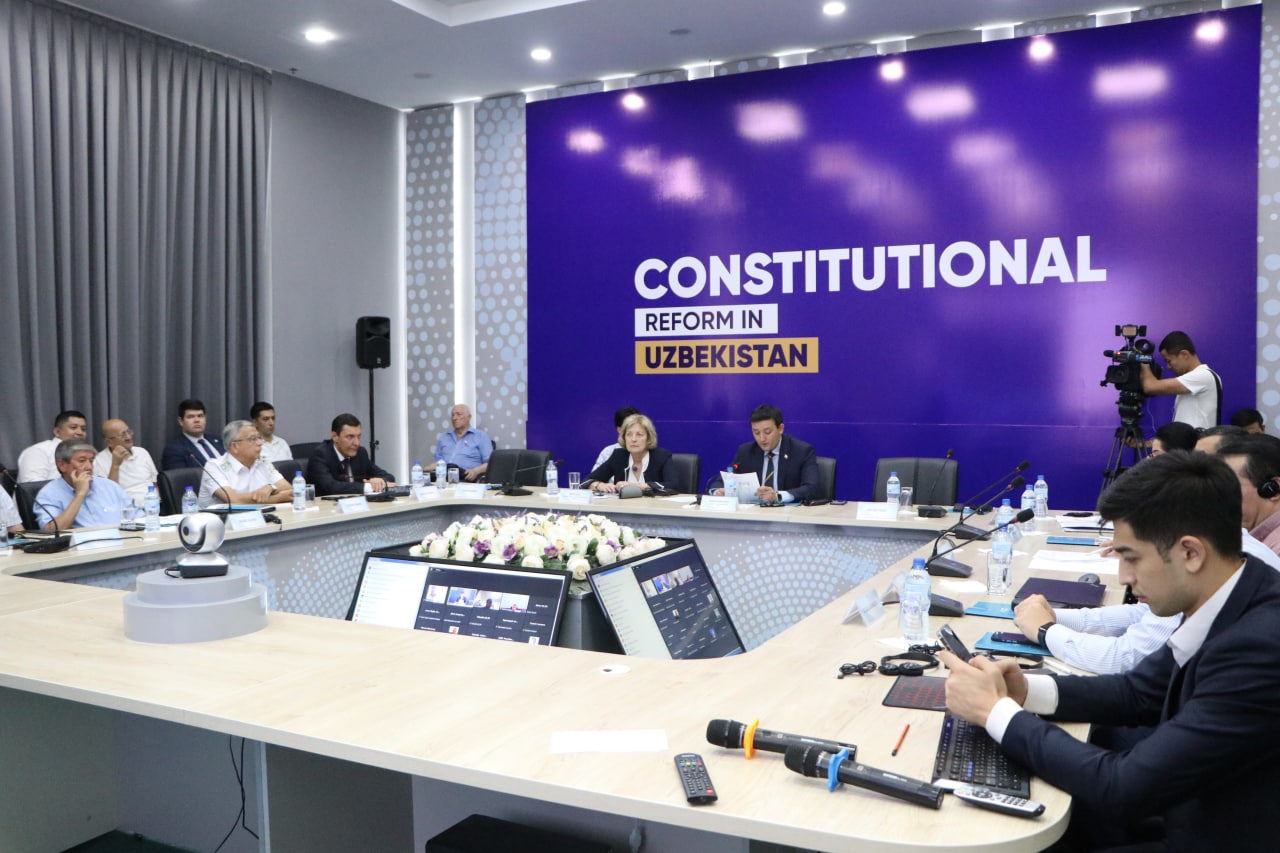
On August 16 of this year, at an online conference held at the initiative of the Nationwide Movement Yuksalish national and international experts exchanged views on the proposed amendments to the Constitution of the Republic of Uzbekistan and what aspects should be taken into account.
The event was attended by representatives of responsible ministries and agencies, as well as international experts from countries such as the United States, Slovenia, and Sweden.
In our country's constitutional reforms, it is assumed that from now on the focus of state policy will be the individual, his rights and interests, honor and dignity. At the same time, the need has arisen to harmonize the Constitution with modern trends in the development of the state and the political situation in the world. It is considered important to discuss the specifics of constitutional reform not only with our compatriots, but also at the international level with the participation of highly qualified experts and the international community.
“Today, the international community is interested in how the reforms started in Uzbekistan will continue in the future,” says Bobur Bekmurodov, chairman of the Nationwide Movement Yuksalish. “The draft Constitutional Law can become an answer to their questions and show that Uzbekistan will take a step forward and will not stop reforms. The purpose of our meeting with foreign experts is to inform them that our country has chosen an irreversible path. The experts also acknowledge that most of the issues of ensuring human rights, the legal profession, and reforming the judicial system are reflected in the draft law, and they make additional suggestions as well”.
Jeremy Vogel, director of the U.S. Law Institute in Berkeley, who participated in the conference, spoke about the differences and unique aspects of the country's constitution from the constitutions of other countries with many civil rights.
“The Constitution of Uzbekistan has over 100 articles, the U.S. Constitution has 7 articles. We see it as a work plan that outlines the responsibilities of the government: legislative, executive, and judicial branches. The general law of all countries does not define the rights and duties of civil society. These aspects are reflected in the draft of a new constitutional law that is expected to be passed in your country. The first step has been taken, the goals have been set, now it is crucial to fully implement the constitution," Vogel said.
Another expert from the U.S., Daniel Small, a former federal prosecutor and partner at Holland & Knight LLP, noted the importance of defining the status of lawyers in the new version of the Constitution, ensuring the adversarial principle and equality of arms in court proceedings, and ensuring the rights and freedoms of every citizen.
Myusa Sever, director of the international NGO Regional Dialogue, called for attention to the creation of an independent bar in the course of constitutional reforms:
- Abolition of torture, inhumane treatment of defendants, interference in private life only on the basis of a court decision, the release of a suspect before proving guilt are basic human rights. We hope that these principles will be reflected in the new Constitution. We expect changes in the creation of an independent bar. Without independent lawyers it is impossible to talk about adversarial and fair judicial process. This is important for attracting investors to the country. It is necessary for the young generation to feel that Uzbekistan has acquired a new image, to grow up in an environment where the Basic Law is applied every day of their life.
Oybek Isokov, chairman of the Association of People with Disabilities of Uzbekistan, said that equal opportunities should be created in the use of the rights stipulated in the Constitution:
- The principle "New Uzbekistan is a social state" was defined by the head of state as a constitutional norm that emphasizes equal rights, equal opportunities and inclusive development. In practice, this is based on the Law. Currently, our Constitution does not have a clear concept of civil society, it speaks of rights, not equal opportunities. That is, we do not have equal opportunity in the exercise of established rights.
Conference participants advocated that the "Miranda rule," reflected in the Constitution and laws of many countries and international human rights instruments, be reflected in the Basic Law. They noted the need to identify mechanisms of freedom in the interpretation of the Constitution and to guarantee the rights of the media.
Summary
Foreign experts also support the transformation processes in Uzbekistan and the content of constitutional reforms. The constitution must not simply remain a document, it must work. This requires that all structures work and that institutions of civil society are active.
Press service of the Nationwide Movement 'Yuksalish'