

Fight for truth in the information age
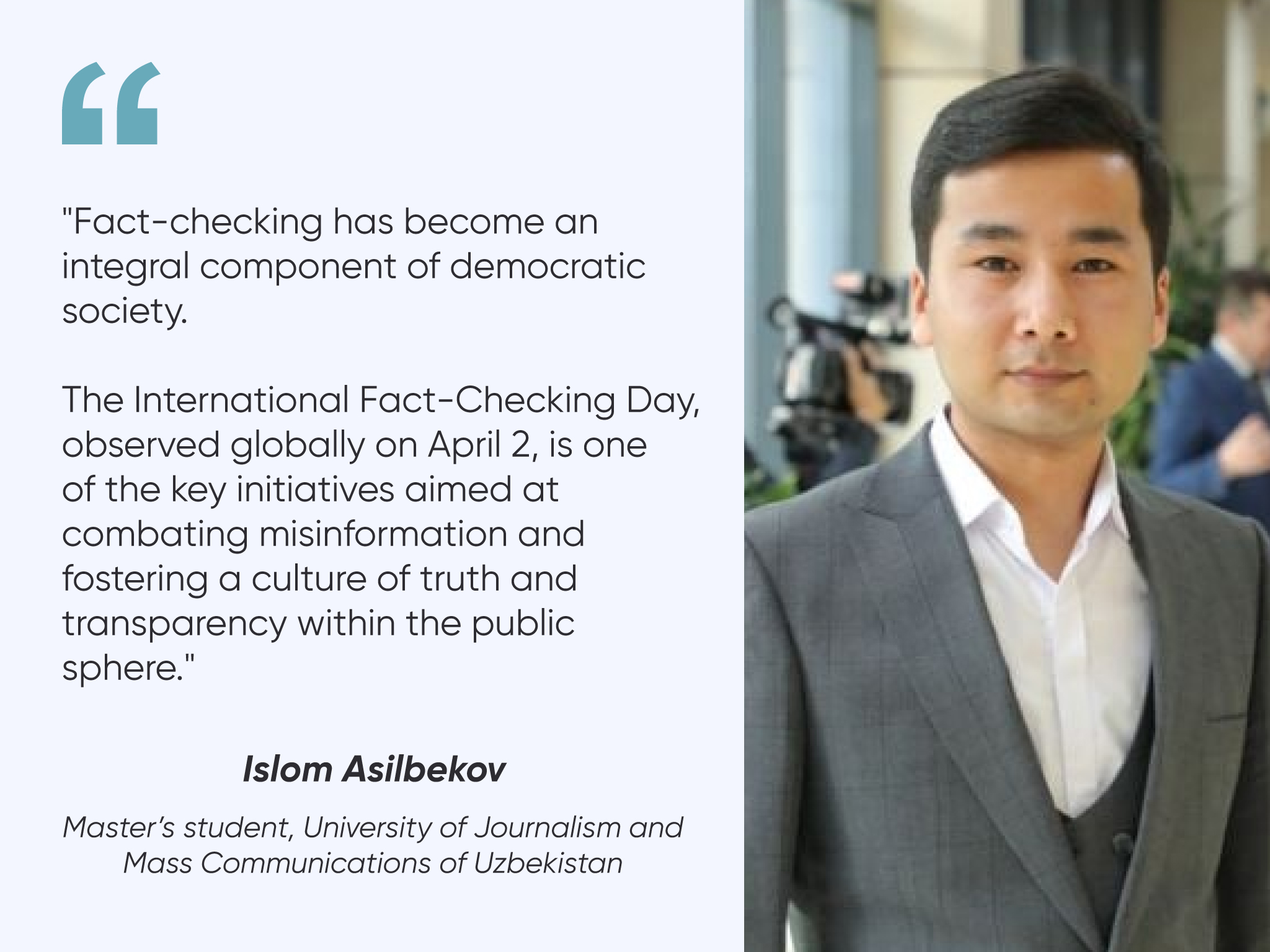
April 2 is commemorated as International Fact-Checking Day.
This day is important for journalists, researchers, and civil society, as it is dedicated to the fight against misinformation and the protection of the public from manipulation. Nowadays, the damage caused by fake news, manipulation, and propaganda is becoming increasingly apparent, so fact-checking has become an integral part of a democratic society.
On February 26-27, a media school on fact-checking, critical thinking, and media literacy was held in Tashkent.
This project was organized by the "Yuksalish" movement with the financial support of the European Union for media representatives and bloggers. The training was aimed at developing skills to combat fake news, manipulation and misinformation. The media school provided participants with essential knowledge on fact-checking methods, critical thinking, and the importance of media literacy. In today's information environment, understanding the truth, identifying reliable sources, and building immunity against have become increasingly important. I believe such initiatives contribute to the spread of high-quality and impartial information among journalists, bloggers, and the general public.
Now, let us return to the main topic.
What is fact-checking and why is it important?
Fact-checking is the process of verifying the accuracy of information, carried out by journalists and researchers to expose false data and bring the truth to the public. This process involves various methods, including consulting reliable sources, using visual evidence, and studying expert opinions.
The importance of fact-checking in today's information landscape is growing for the following reasons:
- Spread of Misinformation: Fake news spreads rapidly through social media and online platforms. This can create misconceptions within society, leading to serious social, economic, and political consequences.
- Manipulation and Propaganda: In the context of manipulating public opinion, it is crucial to identify the truth.
- Preserving Trust in Journalism: The media and journalists must take fact-checking seriously to maintain public trust.
The Fact-Checking Process
Fact-checking follows a specific algorithm:
- Identifying the Target News or Information: Information is selected for analysis.
- Verifying Reliable Sources: The information is verified through official sources. This relies on official documents, independent organizations, and expert opinions.
- Comparing Evidence: Data from various sources is examined.
- Making a Decision and Revealing the Information: The results of the fact-checking process are published, and misinformation is exposed.
Fact-checking in the World and in Uzbekistan
There are several independent fact-checking organizations worldwide.
For example, platforms such as FactCheck.org, Snopes, PolitiFact, Reuters Fact Check, and BBC Reality Check verify various data and help the public help the public access reliable information.
In Uzbekistan, attention to fact-checking has also increased in recent years. For instance, the platform Factchecknet.uz is one of the well-known resources for fact-checking in our country.
The Role of Citizens in Fact-Checking
Everyone can follow these guidelines to protect themselves from false information:
- Checking sources: It is essential to verify the origin of the information and ensure it is based on reliable sources.
- Use additional sources: It is recommended to cross-check the same information across multiple independent sources.
- Do not succumb to emotions: Fake news often affects people's feelings. Therefore, any sensational news should be approached with skepticism.
- Use fact-checking platforms: One can consult both international and local fact-checking platforms to verify the authenticity of the information.
In conclusion, April 2 – International Fact-Checking Day – is a significant initiative in the fight against misinformation. Today, every individual can contribute to protecting the truth by critically analyzing information, opposing false data, and using fact-checking tools. The media, in turn, continue to pay special attention to fact-checking. Only in this way can we preserve the truth in the information age.