

“Disappeared from the radar”: Why active aging centers in Uzbekistan risk becoming a one-year initiative?
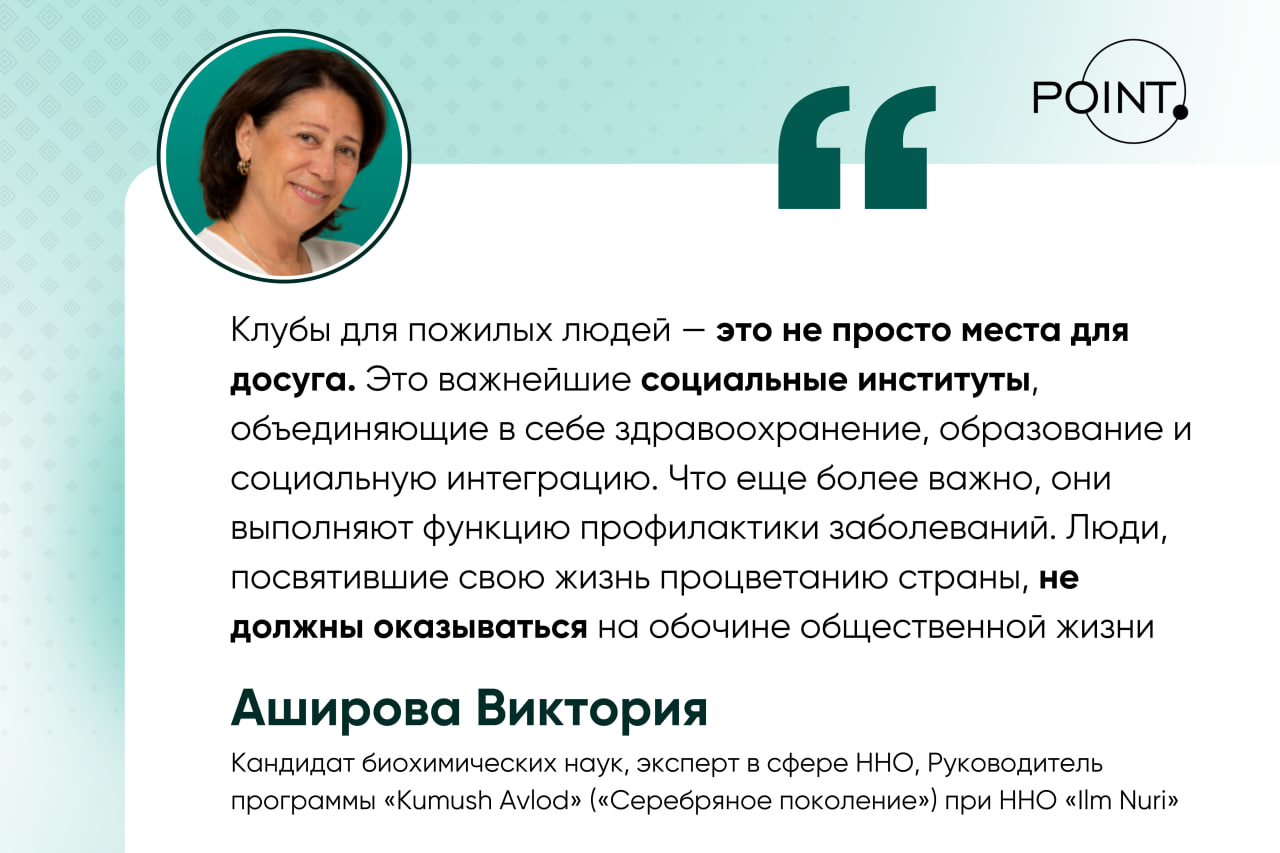
An expert view on the problem of social isolation among the elderly
Recently, an Open Day was held at the Social Club for the Elderly under the “Nuroniy” Foundation in the Yakkasaray district of Tashkent. Launched in March 2025 through the partnership of @hamrohcare, the “Inson” Center, and the National Agency for Social Protection, the project became an important event for pensioners in the capital. In a short time, the Club turned into a space where older people could communicate, learn, and maintain a healthy lifestyle.
However, a year later the project has faced serious challenges. Due to the suspension of state funding, the Club is now considering closing down, seeking sponsors, or switching to a self-financing model. Unfortunately, the latter option is practically unrealistic, since a social center designed for pensioners cannot easily operate entirely on commercial principles.
In general, analysis shows that many pensioners in Uzbekistan remain outside the focus of social policy. Once their working life ends, individuals gradually drift away from state programs as well. As a result, they may begin to feel disconnected from society.
From “retirement” to social isolation
In the country, the retirement age is set at 60 for men and 55 for women. However, many employers perceive this age as the end of active professional life. After that, even if a person still has energy and experience, they may be excluded from active social participation.
Traditionally, caring for the elderly has largely been considered the responsibility of the family. However, migration, urbanization, and changing lifestyles are making this approach increasingly complicated. Many older people live far from their children or spend much of the day alone.
At the same time, urban development programs rarely define older people as a primary target group. Their needs are not always treated as a priority during budget planning. For example, services such as eyeglasses, hearing aids, or dental prosthetics are expensive, and these costs are often borne by pensioners themselves.
In addition, there are not enough information and counseling programs. Issues such as maintaining cognitive abilities, supporting mental health, and adapting to loneliness lack a systematic approach. As a result, social isolation increases the risk of depression and chronic diseases. This is not only a personal issue but also a serious challenge for society.
Global trends and the “silver economy”
Population aging is a global phenomenon. According to UN projections, by 2050 the number of people aged 65 and over will reach 1.6 billion. For this reason, many countries view this process not as a problem but as an opportunity.
The concept of the “silver economy” reflects this idea: older people are not only a vulnerable group in need of assistance but also active consumers, volunteers, and experienced mentors. However, for this to happen they must be involved in social life, educated, and supported. Many countries have established special centers that combine healthy living, education, and social interaction.
The situation in Uzbekistan
Although Uzbekistan has a relatively young population, the number of citizens of retirement age is gradually increasing. Life expectancy is also rising. This means that the issue of active aging will become even more relevant in the future.
The experience of the Club in Yakkasaray raises an important question: is it enough to launch such projects, or is it also necessary to ensure their sustainability? At present, the state provides support at the initial stage, but long-term financial mechanisms remain insufficiently developed.
In fact, this Club could have become a model for the entire republic, as it gives elderly people the opportunity to feel like full members of society.
What does international experience show?
In Kazakhstan, 120 Active Longevity Centers operate with funding from the state budget. In Almaty alone there are 19 branches where pensioners study foreign languages free of charge, exercise, and participate in cultural events.
In the Czech Republic and Germany, the state supports non-governmental organizations through grants and subsidies. Through “silver universities,” older people gain new knowledge. In Russia, the “Moscow Longevity” program organizes free activities in every district.
Thus, international experience demonstrates that such centers can function sustainably only with systematic state support.
Conclusion
Elderly clubs are not merely places for leisure. They are important social institutions that combine healthcare, education, and social integration. Most importantly, they help prevent illnesses, which in the long term is also economically beneficial for the state.
Therefore, long-term state guarantees or sustainable partnership mechanisms involving businesses and NGOs are necessary. After all, people who have contributed to the development of the country should not be left outside the life of society.
The experience of the “Nuroniy” Club in Yakkasaray should not end with closure. On the contrary, it should serve as an impetus to create a clear and sustainable system for supporting active aging centers throughout the republic.
Viktoriya Ashirova
Candidate of Biochemical Sciences, NGO expert with 30 years of experience, Head of the “Silver Generation” program under the NGO “Ilm Nuri.”