

Uzbekistan’s “Silver Economy”: How Reforms Are Transforming the Social Services Market
An analysis of the regulatory framework, PPP practices, and development prospects based on the case of “«HAMROH»
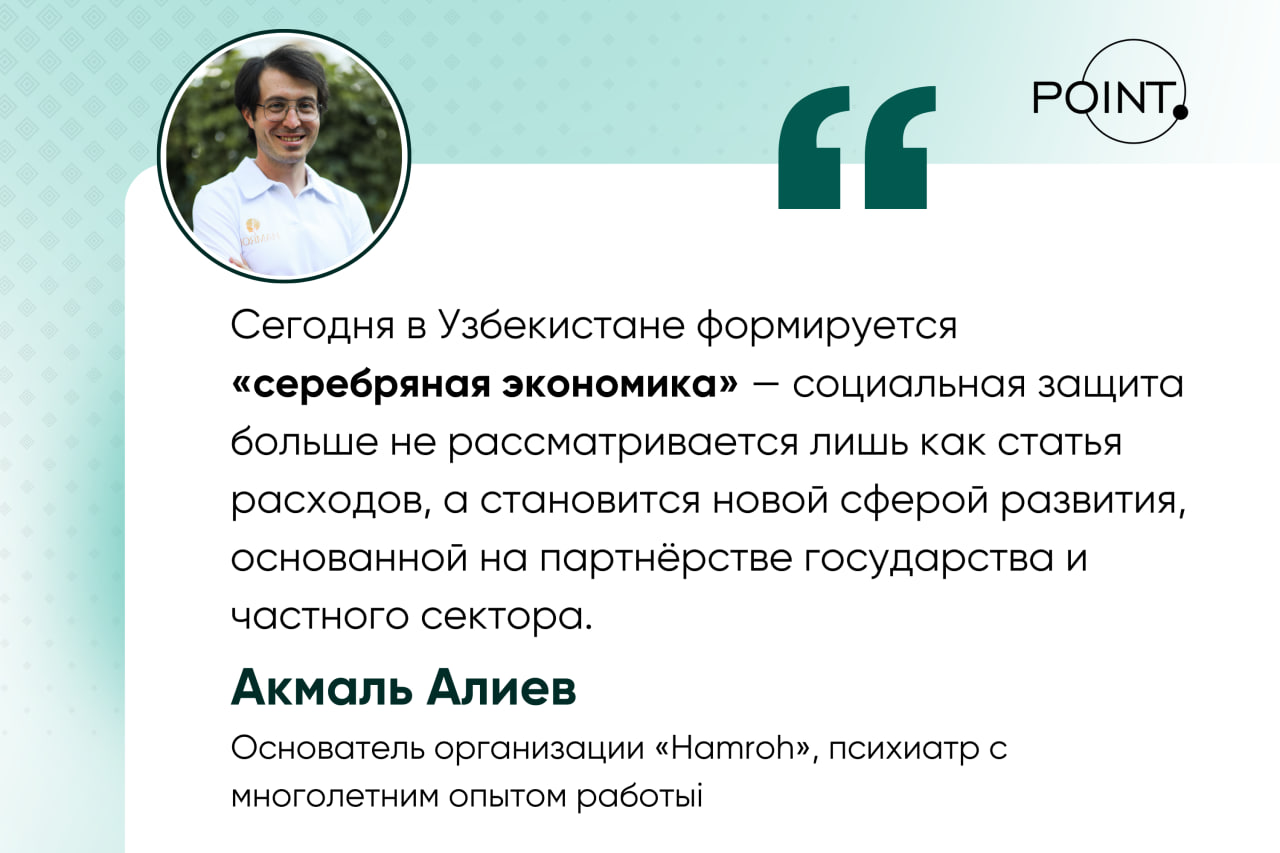
In recent years, Uzbekistan has undergone profound changes in the social sector. Just three years ago, the concept of “elderly care” was largely associated with family responsibility or charity. Today, however, the situation is fundamentally different. In 2026, a “silver economy” is taking shape in the country — a regulated social services market supported by tax incentives, a voucher system, and digital platforms.
The establishment of the National Agency for Social Protection has become a key driver of this transformation. As a result, the social sphere is no longer viewed merely as a budget expenditure item but is evolving into a field of public-private partnership (PPP). However, like any reform process, this transformation is not without challenges. The journey of «HAMROH» organization — from a private initiative to a strategic state partner — clearly illustrates both the achievements and the “growing pains” of the new system
Legal Foundations of the Social Services Market (2024–2025)
It is important to emphasize that the reform of the social protection system was not limited to policy declarations. Starting in 2024, new mechanisms were introduced to identify citizens in need and provide them with targeted support.
In particular, Resolution No. 123 of the Cabinet of Ministers dated March 11, 2024 established the procedure for recognizing citizens as requiring external care. This marked a shift from a uniform service model to individualized care plans tailored to specific beneficiaries.
Furthermore, in October 2024, the “Unified National Social Protection” information system was introduced. This system aims to digitalize record-keeping, ensure transparency, and reduce the influence of the human factor in resource allocation.
In addition, Presidential Resolution No. PP-171 of May 8, 2025 approved the program “Step Towards an Active Life,” which legalized the outsourcing of social services. Amendments to the Tax Code exempted social enterprises from profit tax and VAT. By the end of 2025, a favorable regulatory environment had been established to integrate private capital into the social protection system.
«HAMROH» ORGANIZATION’s Experience: From Private Initiative to Strategic Partnership
«HAMROH» organization began operating in 2023–2024 as a private initiative. Its founder, a practicing psychiatrist, encountered a pressing problem: families of patients with dementia were unable to find qualified care. In response, professional home-based care services were launched. Until the spring of 2024, the organization worked exclusively in the private sector, confirming the existence of strong demand.
Later, when the National Agency for Social Protection announced a pilot outsourcing project, «HAMROH» organization participated. The experiment in Tashkent’s Mirzo-Ulugbek district demonstrated the model’s effectiveness: more than 40 beneficiaries received targeted assistance. Importantly, the state observed that a professional contractor could deliver high-quality services efficiently and cost-effectively.
In 2025, the project expanded nationwide. «HAMROH» began operating in five districts of Tashkent. Additionally, a non-profit social club for elderly people and persons with disabilities was launched. This initiative received one year of state support. However, due to the suspension of funding, the project now faces closure, and the organization is seeking alternative solutions.
2026: Insurance Principles and Systemic Challenges
As of January 1, 2026, the Law “On State Social Insurance” entered into force, introducing a voucher system. The principle that “money follows the client” was intended to strengthen market competition.
Currently, «HAMROH» organization serves more than 200 beneficiaries. Nevertheless, as the system expanded, several structural issues became evident. Payment delays create ongoing cash flow gaps. Technical failures in the reporting platform may result in non-payment for services that have been fully delivered. Moreover, the absence of a unified public registry of service providers increases subjectivity in selecting contractors.
Dementia — A New Policy Priority
Resolution No. 36 of the Cabinet of Ministers dated January 29, 2026 introduced daytime care services for individuals diagnosed with dementia, Parkinson’s disease, and Alzheimer’s disease. This signals the emergence of a new specialized segment within the social services market.
In response, «HAMROH» plans to open a daytime support center for individuals with dementia in March 2026. The center will promote socialization for patients while providing respite for their families. The allocation of subsidized premises and leadership training based on the Japanese care model reflect the state’s serious commitment to this direction.
Conclusion
Overall, «HAMROH» organization’ experience demonstrates that within three years it is possible to build a sustainable social enterprise in Uzbekistan based on private initiative. The state has established a legal foundation and shown flexibility in integrating private actors into the system.
At the same time, the full development of the “care industry” requires two essential conditions: stable digital systems and strict financial discipline. Timely payments are crucial not only for business sustainability but also for maintaining service quality and public trust.
Otherwise, the “silver economy” risks becoming not a space for development, but a zone of survival.
Akmal Aliyev
Founder of «HAMROH» organization
Practicing psychiatrist with many years of experience