

Dress Code Requirements at Universities: Order or Choice?
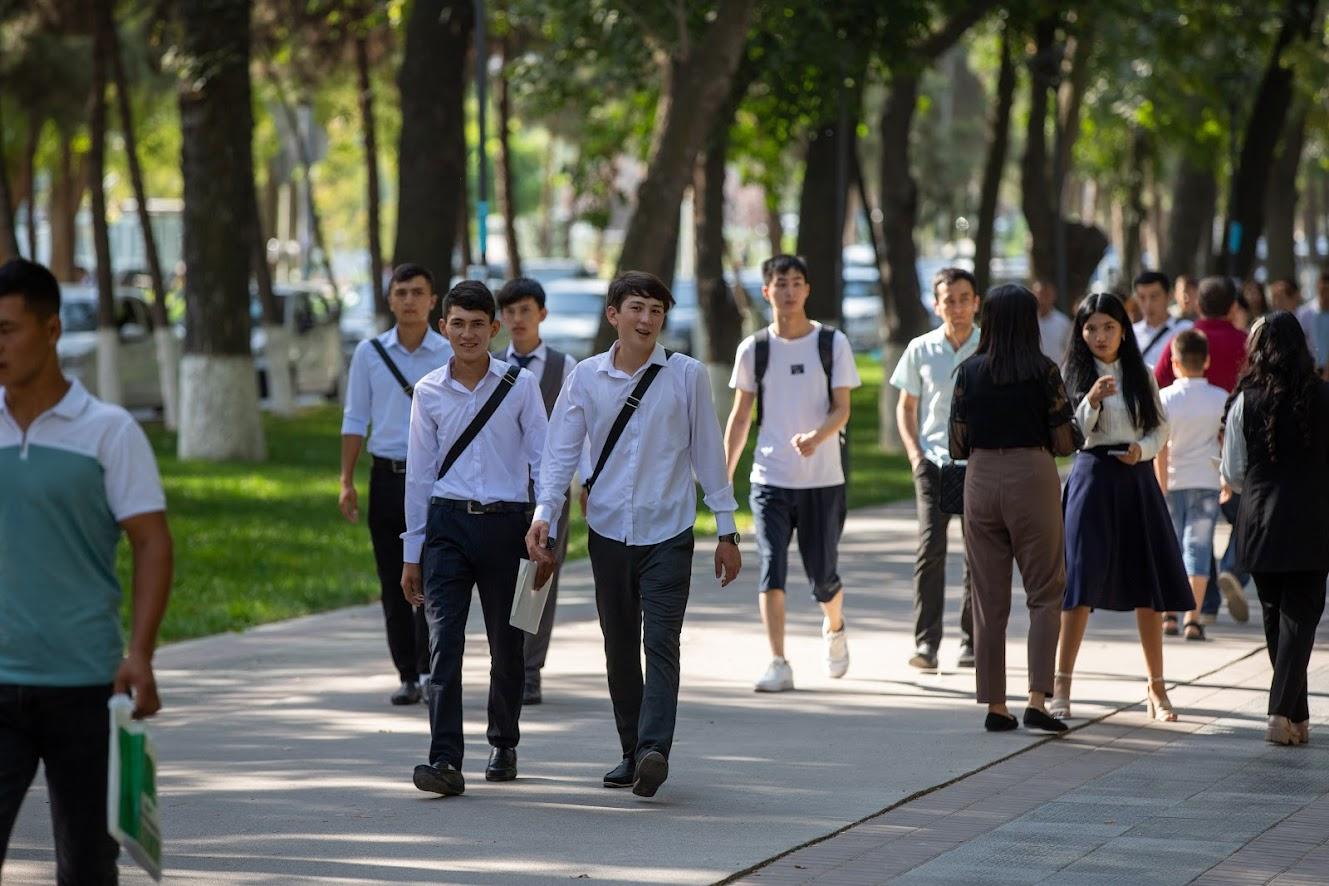
In recent years, the issue of students’ appearance and dress culture in higher education institutions has become one of the widely discussed topics in society. This is not only about discipline. It is also directly linked to the academic environment, university culture and the balance between freedom and responsibility.To study students’ views on this issue, “Yuksalish” movement, in cooperation with the Youth Parliament under the Legislative Chamber of the Oliy Majlis, conducted a nationwide survey. A total of 12,221 students took part.
Unlike schools, universities in Uzbekistan do not have a single mandatory uniform system. Dress-related issues are mainly regulated through each university’s internal rules and codes of ethics. At the same time, the Concept for the Development of Higher Education until 2030 emphasizes academic autonomy, internal culture and ethical standards in universities.
How do students view university uniforms?
The survey showed that students do not have a single, uniform position on this issue.
54.9% of respondents, or 6,683 students, support the idea of having certain dress requirements at universities. In their view, a neat and aesthetically appropriate environment is an important part of the learning process.
26.8%, or 3,267 students, expressed a neutral position. They do not see uniforms or dress requirements as a factor that directly affects the quality of education.
Meanwhile, 18.3%, or 2,261 students, opposed uniform requirements. According to this group, clothing does not determine a student’s knowledge, academic performance or learning outcomes.
Does a uniform improve the academic environment?
The results show that students approach the issue in a practical and balanced way.
42.5% of respondents believe that uniforms can help create a sense of equality among students. 38.4% said that uniforms make the academic environment more orderly and formal. Another 22.5% linked uniforms with stronger discipline and responsibility, while 21.7% saw them as part of a university’s image.
At the same time, many students emphasized that the quality of education depends on other factors. 30.2% of respondents said that learning outcomes are more closely related to personal motivation, discipline and attitude toward education, while uniforms are not a decisive factor.
Some students also pointed to possible negative effects. 14.2% said dress requirements may cause discomfort or psychological pressure.
The survey also showed that students prefer general dress culture rules over a strict uniform system. 46.2% supported limiting overly revealing or excessively short clothing, while 44.2% considered classic or semi-classic styles acceptable. 38.6% said comfortable and simple clothing should be allowed. 26.7% opposed large inscriptions and advertising elements on clothing. At the same time, 22% said a specific uniform should not be mandatory.
Fewer respondents supported restrictions on very bright colors (13.1%) and sportswear (8.5%).
Overall, students support certain aesthetic and cultural standards in the academic environment, but demand for a strict and unified uniform system remains relatively low.
Dialogue as the main solution
The survey results show that students prefer open and constructive dialogue over mandatory measures.
52.8% of respondents said universities should address this issue through explanation and open communication. This indicates a strong demand for solutions based on understanding and agreement.
Another 17.7% supported discussing dress rules together with student councils. In their view, when students participate in decision-making, such rules are more likely to be accepted and followed.
Only 10.7% preferred regulating the issue strictly through internal regulations and official rules.
In general, the findings confirm that most students favor an approach based on trust, explanation and cooperation rather than compulsion.
Proposals for improving dress culture
Based on the study, several practical recommendations were proposed.
First, universities should gradually move away from the concept of a mandatory “uniform” and introduce a more modern and flexible dress code system. Such an approach would focus not on strict obligation, but on shared cultural standards.
It is also recommended that each university study students’ opinions at least once a year and regularly review existing rules. This would help keep the rules relevant and aligned with students’ needs.
For first-year students, a special orientation module on “academic environment and appearance culture” could be introduced. This would help students better adapt to university life.
In addition, punitive approaches to dress control should be avoided. Instead, the role of student councils should be strengthened. A cooperation-based model can increase both acceptance and effectiveness of the rules.
To strengthen university identity, voluntary branded attributes such as logo clothing, badges and accessories may also be developed. This can help build a stronger sense of belonging among students.
Another proposal is to introduce an “aesthetic and cultural environment index.” This index should not be used as a tool to control clothing, but rather to assess the overall cultural atmosphere, visual order and student satisfaction at universities.
What do students say?
Students’ comments revealed a wide range of views.
Many emphasized that the main focus in higher education should be on knowledge and quality education, not appearance. Some argued that since higher education is not compulsory, uniforms should not be compulsory either. Others noted that teachers should demand knowledge from students, not judge their clothing.
At the same time, many students supported a balanced approach: everyone should be free to dress comfortably, but within generally accepted norms.
Overall, students’ comments show that a dress policy based on dialogue, mutual agreement and respect for freedom would be more effective.
The minister’s position
Minister of Higher Education, Science and Innovation Kungirotboy Sharipov also commented on the issue. According to him, students’ clothing does not directly affect the quality of education, but the issue is connected to public order and social balance.
The minister noted that dress requirements in universities are not set centrally. Instead, each higher education institution defines them based on its internal policy and brand. In other words, the ministry has not instructed universities to introduce a single uniform.
“No such instruction has been given by anyone. But every higher education institution should create its own brand. A university is not only a place of education, but also a center of culture,” the minister said.
He also made it clear that he does not support excessive strictness. In his words, if a student is dressed neatly and properly, there is no need to impose mandatory requirements.
At the same time, the minister noted that the issue has another side. According to him, while clothing does not affect education quality, universities are part of society. If there are no common standards, different styles of dress may sometimes lead to disagreements or tensions.
Based on this approach, the minister emphasized the need for balance: not absolute freedom, but not excessive control either.
Final conclusion
The analysis shows that the main trend is the development of a university-appropriate dress code culture rather than a strict uniform system.
Students prefer a flexible, less restrictive and dialogue-based approach. At the same time, the need for minimum aesthetic and ethical standards in the academic environment is also recognized.
In the coming years, the key direction in addressing dress issues at universities will likely be maintaining a balance between order and freedom, involving students in decision-making and moving away from compulsory approaches.
Such an approach can help build a modern, open and respectful academic environment in higher education institutions.
Press Service of “Yuksalish” movement